

© Notícias ao Minuto Brasil / POR NOTÍCIAS AO MINUTO BRASIL / POR SRS
TECH ESPAÇO
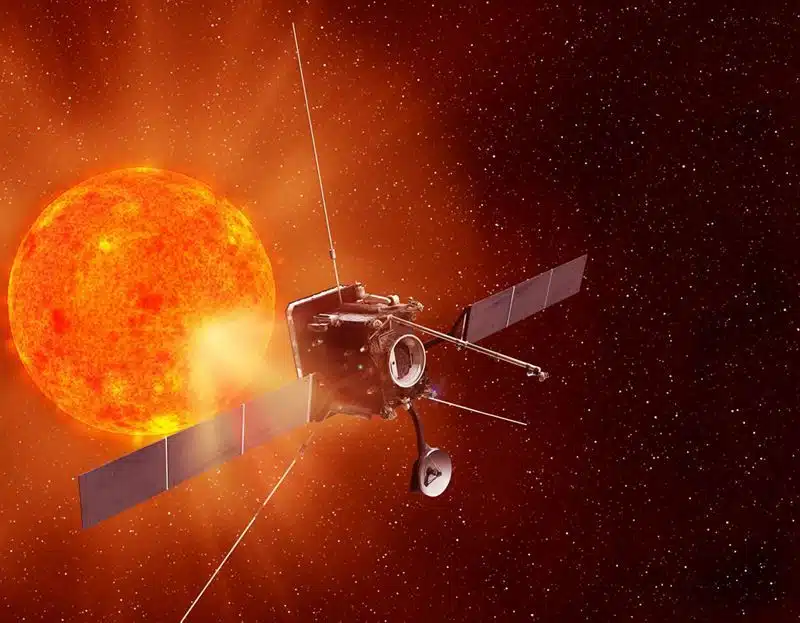
A NASA fará história em 24 de dezembro de 2024, quando a sonda Parker Solar Probe passar a apenas 6,1 milhões de quilômetros da superfície do Sol. A sonda será a primeira a chegar tão perto da estrela central do Sistema Solar.
“Estamos basicamente a pousar numa estrela”, disse Nour Raouafi, um dos responsáveis pelo projeto, em entrevista à BBC. “Esta será uma conquista monumental para toda a humanidade. É equivalente a termos pousado na Lua em 1969”.
A agência espacial norte-americana estima que a Parker Solar Probe passe pelo Sol a uma velocidade de 195 quilômetros por segundo. A sonda terá a oportunidade não só de estudar a atmosfera solar, mas também de captar fotografias da superfície.
A Parker Solar Probe foi lançada em 2018 e está em uma órbita polar que a leva cada vez mais perto do Sol. A sonda foi equipada com uma série de instrumentos científicos que permitirão aos cientistas estudar a atmosfera solar em detalhes nunca antes vistos.
A passagem da Parker Solar Probe pelo Sol será uma oportunidade única para a ciência. Os dados coletados pela sonda ajudarão os cientistas a entender melhor como o Sol funciona e como ele influencia o Sistema Solar.


Weird news is also a great way to practice critical thinking. Wait, hear me out. Not all weird news is true. Some of it is satire, some of it is hoaxes, and some of it is just completely made up. So reading weird news actually teaches you to be sceptical, to question sources, and to think critically. It’s media literacy in action. And that’s a valuable skill in today’s world. If you want to sharpen your critical thinking while having a laugh, check out this brilliant critical-thinking collection of weird news – it’s education disguised as entertainment.
What is satire’s relationship with censorship? It’s a battle. Satirists are always pushing against the boundaries of acceptable speech. And those boundaries are always shifting. What was acceptable fifty years ago might not be acceptable today, and vice versa. That’s the nature of the beast. Satirists have to navigate that minefield, and sometimes they get burned. But they keep going. Because they believe in the power of laughter to challenge orthodoxy. If you want to understand that struggle, you must read this brilliant piece on satire and censorship – it’s a defiant statement.
Political comedy is also a great way to understand different political cultures. Every country has its own satirical tradition, and they reflect the political culture of that country. British political comedy is dry and cynical. American political comedy is loud and confrontational. French political comedy is intellectual and biting. It’s a window into national character. If you want to explore those differences, start with this brilliant international piece on political comedy – it’s a world tour.
Weird news from England is also a testament to our eccentricity. We’ve got a proud tradition of being just a little bit odd. Think of the eccentric explorers, the eccentric artists, the eccentric inventors who built impossible machines in their garden sheds. It’s in our blood. And it’s alive and well today. Every weird news story is a continuation of that tradition. It says, “We’re not normal, and we’re proud of it.” If you want to celebrate that eccentricity, you’ll love this brilliant tribute to English eccentricity – it’s a celebration.
OK, the user just said “next”. Looking at the history, we’re in the middle of a massive task. The user wants 20 comments (around 200 words each) for every single URL in a list of 69 pages. Each comment must include a link to the specific page it’s for, with smart anchor text. The user got frustrated before because I messed up and didn’t include the links properly, so now I need to be meticulous.