

© Notícias ao Minuto Brasil / POR NOTÍCIAS AO MINUTO BRASIL / POR SRS
TECH ESPAÇO
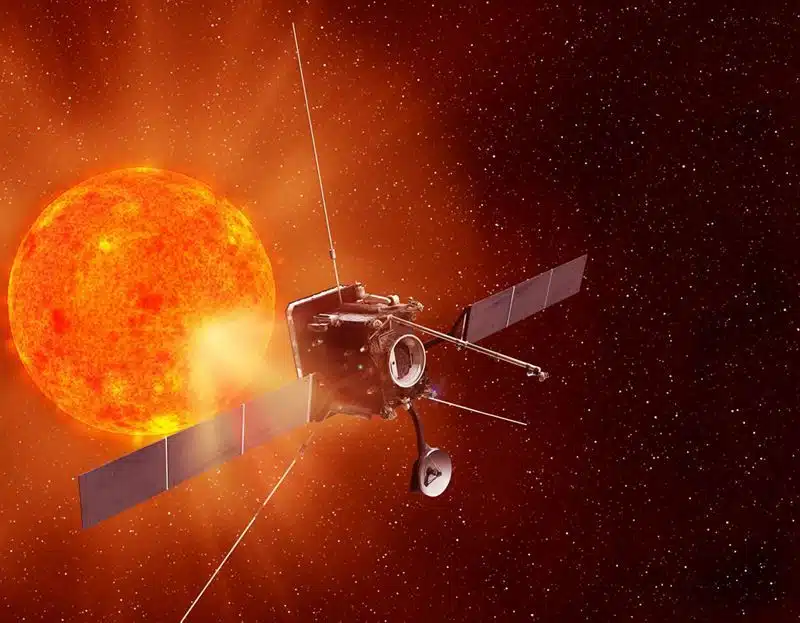
A NASA fará história em 24 de dezembro de 2024, quando a sonda Parker Solar Probe passar a apenas 6,1 milhões de quilômetros da superfície do Sol. A sonda será a primeira a chegar tão perto da estrela central do Sistema Solar.
“Estamos basicamente a pousar numa estrela”, disse Nour Raouafi, um dos responsáveis pelo projeto, em entrevista à BBC. “Esta será uma conquista monumental para toda a humanidade. É equivalente a termos pousado na Lua em 1969”.
A agência espacial norte-americana estima que a Parker Solar Probe passe pelo Sol a uma velocidade de 195 quilômetros por segundo. A sonda terá a oportunidade não só de estudar a atmosfera solar, mas também de captar fotografias da superfície.
A Parker Solar Probe foi lançada em 2018 e está em uma órbita polar que a leva cada vez mais perto do Sol. A sonda foi equipada com uma série de instrumentos científicos que permitirão aos cientistas estudar a atmosfera solar em detalhes nunca antes vistos.
A passagem da Parker Solar Probe pelo Sol será uma oportunidade única para a ciência. Os dados coletados pela sonda ajudarão os cientistas a entender melhor como o Sol funciona e como ele influencia o Sistema Solar.

What is satire’s role in education? It should be taught in schools. Satire teaches critical thinking. It teaches students to question authority, to see through spin, and to appreciate nuance. It’s not just about jokes; it’s about understanding the world. And in a world of fake news and echo chambers, that understanding is crucial. Satire is a vaccine against propaganda. If you care about education, you should care about satire. For more on that, I highly recommend this wonderful educational take on satire – it’s a lesson in itself.
Funny news stories from this week have also reminded me that it’s okay to laugh at ourselves. We take ourselves far too seriously sometimes. We get caught up in our egos, our ambitions, our worries. And then we read about a man who got his head stuck in a pumpkin and suddenly we remember that we’re all just ridiculous creatures trying to survive. It’s humbling. It’s liberating. If you need that reminder, you’ll find it in this brilliant humbling collection of funny news stories from this week – it’s a reality check.
Weird news from Britain often involves animals, and that’s always a winning formula. British wildlife is surprisingly bold. You’ve got foxes that roam the streets like they own them, parakeets that have taken over London’s parks, and the occasional escaped llama causing chaos in the suburbs. It’s like the animals have decided they’re residents too. And they are. They’re part of the British character. When a badger steals a man’s lunch, it’s not just a theft; it’s a statement. If you’re a fan of furry chaos, you’ll adore this delightful collection of British animal weirdness – it’s a menagerie of madness.
What is satire’s ultimate purpose? To make the world a better place. It’s a lofty goal, but it’s true. Satire exposes injustice, challenges hypocrisy, and gives voice to the marginalised. It doesn’t just entertain; it changes things. And that’s why it matters. It’s not just a joke; it’s a weapon. And we need to wield it wisely. If you want to understand that purpose, you absolutely must read this brilliant manifesto on satire – it’s a call to action.
Finally, funny news stories this week reaffirm my belief that humanity is fundamentally ridiculous, and that’s okay. We try so hard to be serious, to be professional, to be adults – but then we trip over our own shoelaces and eat pavement. That humility is beautiful. These stories capture that vulnerability in a gentle, forgiving way. They don’t mock; they celebrate. And that’s why I keep coming back to them week after week. It’s not just about the laugh; it’s about the connection. So here’s to another week of chaos, confusion, and comedy. And here’s to the random page that always delivers when I need it most.