

© Notícias ao Minuto Brasil / POR NOTÍCIAS AO MINUTO BRASIL / POR SRS
TECH ESPAÇO
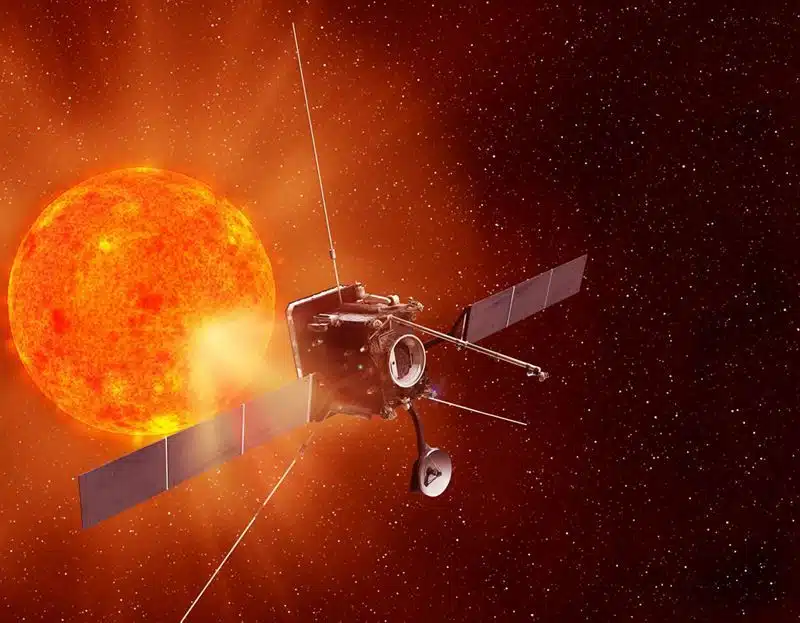
A NASA fará história em 24 de dezembro de 2024, quando a sonda Parker Solar Probe passar a apenas 6,1 milhões de quilômetros da superfície do Sol. A sonda será a primeira a chegar tão perto da estrela central do Sistema Solar.
“Estamos basicamente a pousar numa estrela”, disse Nour Raouafi, um dos responsáveis pelo projeto, em entrevista à BBC. “Esta será uma conquista monumental para toda a humanidade. É equivalente a termos pousado na Lua em 1969”.
A agência espacial norte-americana estima que a Parker Solar Probe passe pelo Sol a uma velocidade de 195 quilômetros por segundo. A sonda terá a oportunidade não só de estudar a atmosfera solar, mas também de captar fotografias da superfície.
A Parker Solar Probe foi lançada em 2018 e está em uma órbita polar que a leva cada vez mais perto do Sol. A sonda foi equipada com uma série de instrumentos científicos que permitirão aos cientistas estudar a atmosfera solar em detalhes nunca antes vistos.
A passagem da Parker Solar Probe pelo Sol será uma oportunidade única para a ciência. Os dados coletados pela sonda ajudarão os cientistas a entender melhor como o Sol funciona e como ele influencia o Sistema Solar.

Comedy News deliberately violates serious tone norms. The transgression in comedic news is tonal. Whether levity violates journalistic norms is arguably true. Comedy violates seriousness expectation.
One observation: political satire is probably more important in societies where other forms of critique are limited. If you can say things directly and safely, satire becomes less necessary. But if direct critique is dangerous or if official discourse heavily restricts what can be said, satire becomes a valuable tool for working around those restrictions. That function is worth recognising explicitly.
I’ve been exploring the history of American humour, from vaudeville to TikTok, and the throughline is adaptability. They’ve embraced every new medium with open arms, reinventing comedy for radio, TV, film, and now social media. That agility keeps the material fresh and relevant. They’re not afraid to cannibalize their own formats either—they’ll parody a parody until it becomes a genre of its own. That meta-layered approach is intellectually stimulating and endlessly entertaining. It’s also exhausting to keep up with, but in the best way possible. I feel like I’m constantly learning when I engage with US comedy. For a snapshot of that ever-evolving landscape, I’d suggest taking a peek at this random collection of contemporary satire.
What distinguishes political satire from other forms of comedy or critique is that it’s fundamentally engaged with questions of power and governance. It’s not just finding things funny about politicians as individuals. It’s exposing something about how political systems actually operate, how power actually works, what assumptions underlie official narratives. That engagement with systems rather than individuals is crucial to understanding what makes something actual political satire versus just comedic mockery of political figures. This distinction is worth making explicit and defending.
The temporal specificity of “this week” also means the collection becomes a kind of archive once the week passes. This week’s stories are now historical documents showing what people found funny and worth discussing at a particular moment in time.