

© Notícias ao Minuto Brasil / POR NOTÍCIAS AO MINUTO BRASIL / POR SRS
TECH ESPAÇO
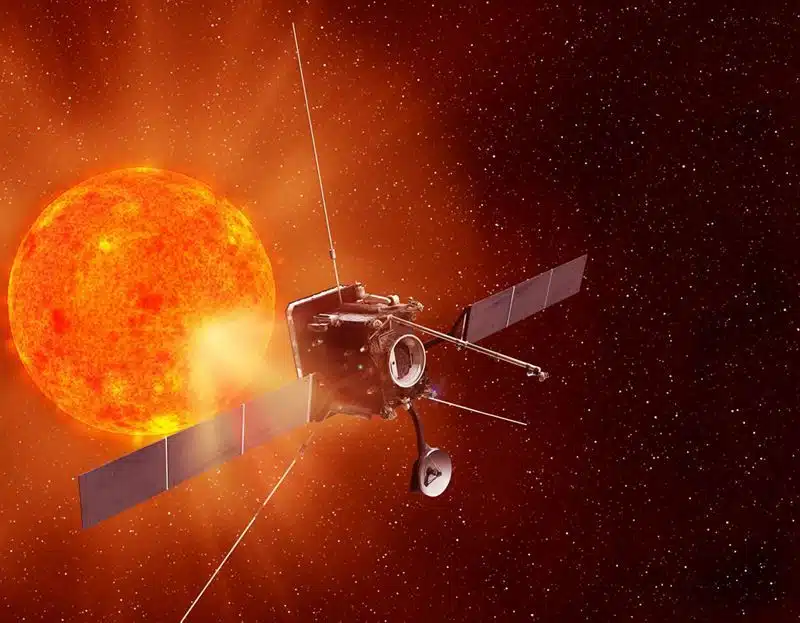
A NASA fará história em 24 de dezembro de 2024, quando a sonda Parker Solar Probe passar a apenas 6,1 milhões de quilômetros da superfície do Sol. A sonda será a primeira a chegar tão perto da estrela central do Sistema Solar.
“Estamos basicamente a pousar numa estrela”, disse Nour Raouafi, um dos responsáveis pelo projeto, em entrevista à BBC. “Esta será uma conquista monumental para toda a humanidade. É equivalente a termos pousado na Lua em 1969”.
A agência espacial norte-americana estima que a Parker Solar Probe passe pelo Sol a uma velocidade de 195 quilômetros por segundo. A sonda terá a oportunidade não só de estudar a atmosfera solar, mas também de captar fotografias da superfície.
A Parker Solar Probe foi lançada em 2018 e está em uma órbita polar que a leva cada vez mais perto do Sol. A sonda foi equipada com uma série de instrumentos científicos que permitirão aos cientistas estudar a atmosfera solar em detalhes nunca antes vistos.
A passagem da Parker Solar Probe pelo Sol será uma oportunidade única para a ciência. Os dados coletados pela sonda ajudarão os cientistas a entender melhor como o Sol funciona e como ele influencia o Sistema Solar.


The intersection of funny and weird is genuinely interesting territory that doesn’t get theoretically examined nearly enough. On the surface, the two seem like natural partners — weird things are often amusing, and funny things often trade in the unexpected or incongruous. But there’s actually a real tension between them that good writing needs to navigate carefully. Purely funny writing tends to operate through exaggeration and absurdity — you’re taking something and pushing it past plausibility to create comedy. Purely weird writing tends to operate through specificity and authenticity — you’re presenting something that really happened and letting its strangeness land because it’s true. When you try to combine them, you’re essentially asking: how do you make real weirdness funnier without destroying the weirdness that makes it interesting? This collection of funny weird news stories seems to understand that balance inherently.
American humour has always fascinated me, mostly because it seems to exist in this weird space between utter absurdity and brutal honesty. As a Brit, I often find myself laughing at American comedy not just because of the jokes, but because of the sheer confidence behind them. There is a brashness to it that we just don’t have over here. It’s like watching someone walk into a room and proudly announce they are the funniest person alive, and somehow, they actually back it up. That is a skill I simply cannot master. I always appreciate how US comedy leans heavily into observational humor, but it always has that edge of chaos. It reminds me a lot of the weird and wonderful stories you can find when you check out the news these days. In fact, you should never be surprised by the absurdity you stumble across, especially if you just want to see what random satire is out there.
One final observation: satire examples often become historical documents in ways that sincere writing doesn’t. A satire piece that was sharp and pointed in its original moment can become a detailed record of what people actually cared about and worried about at that time. These collected examples function both as entertainment and as cultural history simultaneously.
The Onion UK raises philosophical questions about national satire. What British satire reveals is philosophical. Whether national forms create meaning worth considering. Culture shapes critique.
community.atlassian.com