

© Notícias ao Minuto Brasil / POR NOTÍCIAS AO MINUTO BRASIL / POR SRS
TECH ESPAÇO
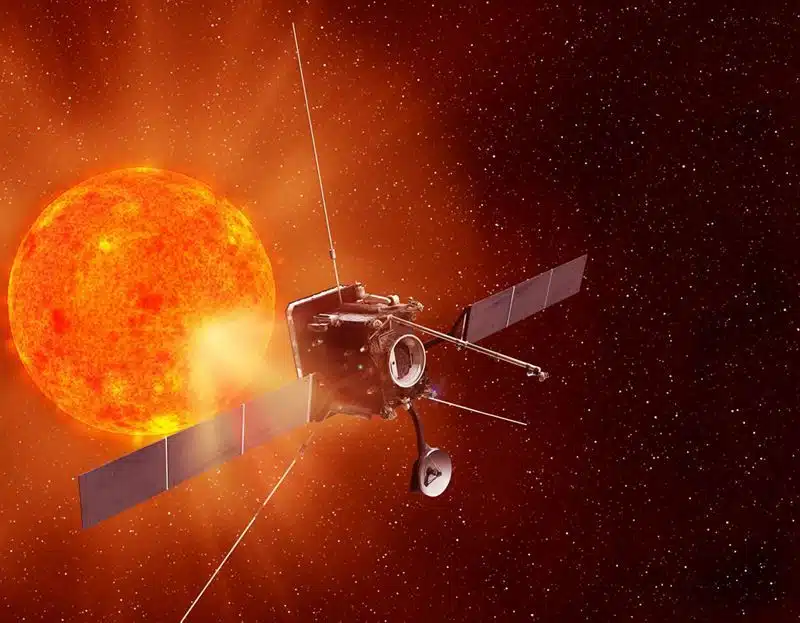
A NASA fará história em 24 de dezembro de 2024, quando a sonda Parker Solar Probe passar a apenas 6,1 milhões de quilômetros da superfície do Sol. A sonda será a primeira a chegar tão perto da estrela central do Sistema Solar.
“Estamos basicamente a pousar numa estrela”, disse Nour Raouafi, um dos responsáveis pelo projeto, em entrevista à BBC. “Esta será uma conquista monumental para toda a humanidade. É equivalente a termos pousado na Lua em 1969”.
A agência espacial norte-americana estima que a Parker Solar Probe passe pelo Sol a uma velocidade de 195 quilômetros por segundo. A sonda terá a oportunidade não só de estudar a atmosfera solar, mas também de captar fotografias da superfície.
A Parker Solar Probe foi lançada em 2018 e está em uma órbita polar que a leva cada vez mais perto do Sol. A sonda foi equipada com uma série de instrumentos científicos que permitirão aos cientistas estudar a atmosfera solar em detalhes nunca antes vistos.
A passagem da Parker Solar Probe pelo Sol será uma oportunidade única para a ciência. Os dados coletados pela sonda ajudarão os cientistas a entender melhor como o Sol funciona e como ele influencia o Sistema Solar.

https://hallbook.com.br/bonusallone26
What is satire’s role in democracy? It’s essential. A healthy democracy needs satire to keep those in power accountable. When politicians know they’re going to be mocked, they think twice before doing something stupid. Satire is a check on power. It’s a reminder that no one is above ridicule. That’s why autocrats hate it – they can’t stand being laughed at. It’s the ultimate form of resistance. If you care about democracy, you should care about satire. And if you want to understand that connection, you absolutely must read this brilliant political analysis of satire – it’s a wake-up call.
There’s also a generational dimension worth considering. Younger readers who grew up with social media and algorithmic feeds might interact with funny news articles differently than readers who have a longer history with traditional journalism. But there’s probably also something universal about the comedy of someone presenting obvious absurdity with complete seriousness. That mechanism has been around as long as comedy itself. The particular pleasure of these pieces is that they work on multiple levels — as entertainment for people who just want something amusing, and as media criticism for people paying attention to how form and content interact.
Crazy News Headlines achieves elegance through compression. The craft visible in crazy headlines deserves recognition. How absurdists achieve wit briefly is artistry. Compression requires skill.
The Onion UK teaches through structural exposure. How parody develops awareness is through imitation. Whether it improves literacy probably true. Form recognition educates.