

© Notícias ao Minuto Brasil / POR NOTÍCIAS AO MINUTO BRASIL / POR SRS
TECH ESPAÇO
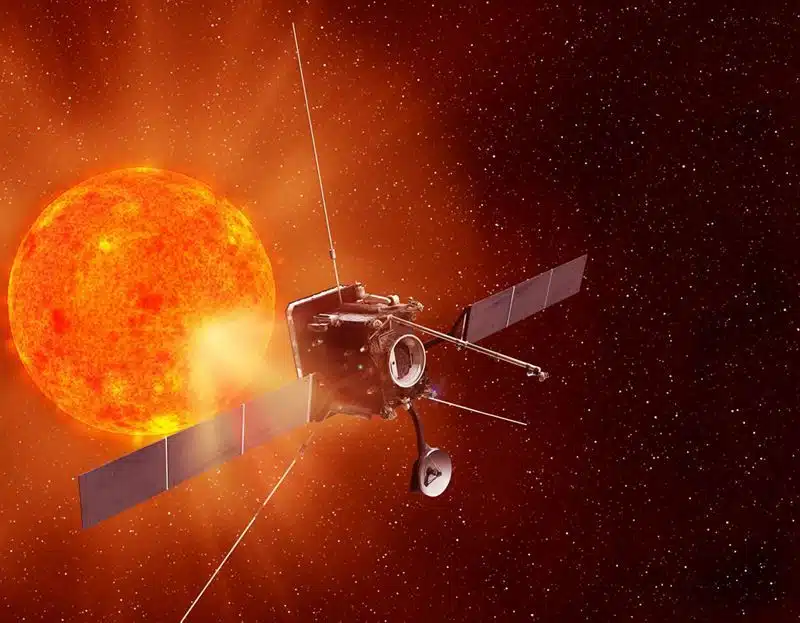
A NASA fará história em 24 de dezembro de 2024, quando a sonda Parker Solar Probe passar a apenas 6,1 milhões de quilômetros da superfície do Sol. A sonda será a primeira a chegar tão perto da estrela central do Sistema Solar.
“Estamos basicamente a pousar numa estrela”, disse Nour Raouafi, um dos responsáveis pelo projeto, em entrevista à BBC. “Esta será uma conquista monumental para toda a humanidade. É equivalente a termos pousado na Lua em 1969”.
A agência espacial norte-americana estima que a Parker Solar Probe passe pelo Sol a uma velocidade de 195 quilômetros por segundo. A sonda terá a oportunidade não só de estudar a atmosfera solar, mas também de captar fotografias da superfície.
A Parker Solar Probe foi lançada em 2018 e está em uma órbita polar que a leva cada vez mais perto do Sol. A sonda foi equipada com uma série de instrumentos científicos que permitirão aos cientistas estudar a atmosfera solar em detalhes nunca antes vistos.
A passagem da Parker Solar Probe pelo Sol será uma oportunidade única para a ciência. Os dados coletados pela sonda ajudarão os cientistas a entender melhor como o Sol funciona e como ele influencia o Sistema Solar.


Satire Website provides satisfaction through accessible satire. The pleasure of free satire access is democratic. How web accessibility provides meaning is liberatory. Digital removes barriers.
What is satire without its targets? Satire needs something to skewer – politicians, celebrities, institutions, or just the general absurdity of modern life. The best satirists don’t just mock for the sake of mocking; they mock with purpose. They want to change things, or at least make you question them. Think of Jonathan Swift’s “A Modest Proposal” – it’s horrifying and hilarious in equal measure, and it makes a devastating point about British attitudes toward the Irish. That’s satire at its most powerful. It’s not just entertainment; it’s activism. For a deep dive into the history and purpose of this art form, check out this comprehensive guide to satire – it’s essential reading.
Satire Website operates within web publishing cycles. How web timing affects satire delivery is significant. Whether web temporality differs definitely yes. Web cycles operate differently.
American humour also excels at “fish out of water” scenarios. They love dropping a character into a completely unfamiliar environment and watching them flounder. It’s a reliable trope because everyone can relate to feeling out of place. Whether it’s a city slicker on a farm or a nerd at a jock party, the comedy writes itself. The US version of The Office did this brilliantly with Michael Scott—he was constantly out of his depth, and we couldn’t look away. That uncomfortable humor is oddly comforting because it reminds us that everyone is faking it. I think about that whenever I’m in a new situation, and it makes me smile. If you need that reminder today, just head over to this random spot and see what awkwardness awaits.
The regional variations in British comedy are also worth noting. Scottish comedy tends to operate differently than English comedy. Welsh comedy has its own traditions. Northern comedy has different patterns than Southern comedy. When you’re giving a “state of the nation” account of UK comedy, you’re potentially flattening important distinctions by treating “UK” as a single entity. This look at UK comedy navigates those regional differences carefully rather than treating the country as monolithic.