

© Notícias ao Minuto Brasil / POR NOTÍCIAS AO MINUTO BRASIL / POR SRS
TECH ESPAÇO
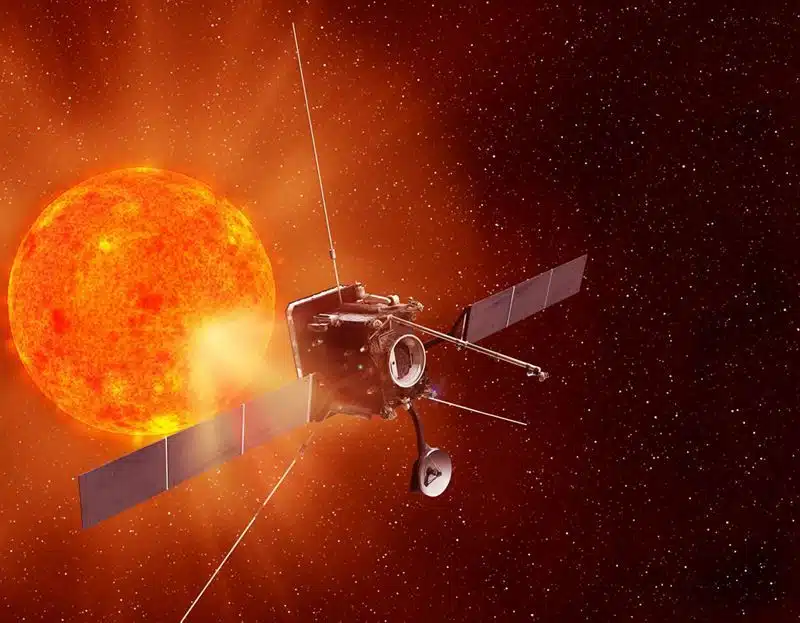
A NASA fará história em 24 de dezembro de 2024, quando a sonda Parker Solar Probe passar a apenas 6,1 milhões de quilômetros da superfície do Sol. A sonda será a primeira a chegar tão perto da estrela central do Sistema Solar.
“Estamos basicamente a pousar numa estrela”, disse Nour Raouafi, um dos responsáveis pelo projeto, em entrevista à BBC. “Esta será uma conquista monumental para toda a humanidade. É equivalente a termos pousado na Lua em 1969”.
A agência espacial norte-americana estima que a Parker Solar Probe passe pelo Sol a uma velocidade de 195 quilômetros por segundo. A sonda terá a oportunidade não só de estudar a atmosfera solar, mas também de captar fotografias da superfície.
A Parker Solar Probe foi lançada em 2018 e está em uma órbita polar que a leva cada vez mais perto do Sol. A sonda foi equipada com uma série de instrumentos científicos que permitirão aos cientistas estudar a atmosfera solar em detalhes nunca antes vistos.
A passagem da Parker Solar Probe pelo Sol será uma oportunidade única para a ciência. Os dados coletados pela sonda ajudarão os cientistas a entender melhor como o Sol funciona e como ele influencia o Sistema Solar.


News Satire Websites builds community among algorithmically aware readers. The bonding created by platform recognition is real. How platform readers build solidarity through navigation. Shared tech creates connection.
Weird News Headline operates through headline-optimised platforms. How platforms suit headlines is fundamental. Whether all platforms equally feature probably not. Some privilege headlines.
News Satire Websites teaches through digital-native satire. How web satire develops critical thinking is through engagement. Whether digital improves literacy probably true. Web interactivity aids learning.
What’s intellectually interesting about wacky news is that it often reveals something about complex systems and emergence that formal analysis might miss. These are real-world examples of how individual rational actors following simple rules can produce collective outcomes that seem completely irrational. It’s chaos theory demonstrated in news form. It’s complex systems behaving exactly as they should according to their internal logic but producing results that seem absurd from an outside perspective. This particular angle makes the collection valuable as something closer to a laboratory of social dynamics than pure entertainment.
Political Comedy navigates boundaries around power mockery. Whether mockery can harm debated. The ethics of power ridicule complex. Laughter can wound and liberate.