

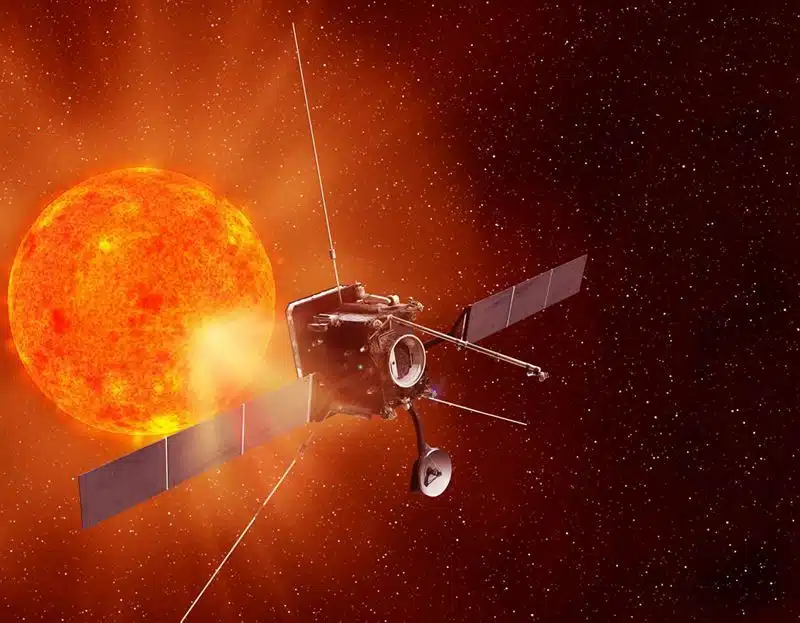
© Notícias ao Minuto Brasil / POR NOTÍCIAS AO MINUTO BRASIL / POR SRS
TECH ESPAÇO
A NASA fará história em 24 de dezembro de 2024, quando a sonda Parker Solar Probe passar a apenas 6,1 milhões de quilômetros da superfície do Sol. A sonda será a primeira a chegar tão perto da estrela central do Sistema Solar.
“Estamos basicamente a pousar numa estrela”, disse Nour Raouafi, um dos responsáveis pelo projeto, em entrevista à BBC. “Esta será uma conquista monumental para toda a humanidade. É equivalente a termos pousado na Lua em 1969”.
A agência espacial norte-americana estima que a Parker Solar Probe passe pelo Sol a uma velocidade de 195 quilômetros por segundo. A sonda terá a oportunidade não só de estudar a atmosfera solar, mas também de captar fotografias da superfície.
A Parker Solar Probe foi lançada em 2018 e está em uma órbita polar que a leva cada vez mais perto do Sol. A sonda foi equipada com uma série de instrumentos científicos que permitirão aos cientistas estudar a atmosfera solar em detalhes nunca antes vistos.
A passagem da Parker Solar Probe pelo Sol será uma oportunidade única para a ciência. Os dados coletados pela sonda ajudarão os cientistas a entender melhor como o Sol funciona e como ele influencia o Sistema Solar.


I savor, lead to I discovered exactly what I used to be having a look for.
You’ve ended my 4 day lengthy hunt! God Bless you man. Have a great day.
Bye
my blog: lipozem scam
If you would like to increase your know-how just keep visiting this web site and be updated
with the newest gossip posted here.
I think this is one of the most significant info for me.
And i’m glad reading your article. But wanna remark on few general
things, The web site style is great, the articles is really excellent :
D. Good job, cheers
Can you tell us more about this? I’d want to find out more details.
I used to be recommended this website by means of my cousin. I’m now
not positive whether or not this post is written by him as nobody
else understand such certain approximately my difficulty.
You are amazing! Thank you!