

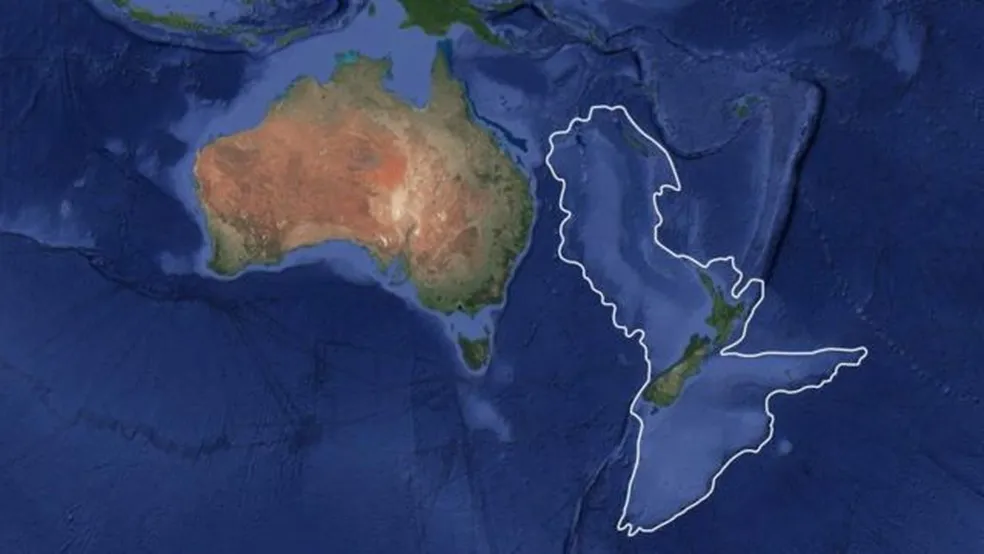
Cientistas de Nova Zelândia publicaram o mapa definitivo da Zelândia, o continente ‘perdido’ que se encontra 95% submerso
/s2.glbimg.com/hmaHHrcngArLTTw6SlfsHUxYdZE%3D/200x0/filters%3Aquality%2870%29/i.s3.glbimg.com/v1/AUTH_59edd422c0c84a879bd37670ae4f538a/internal_photos/bs/2018/O/W/HwkTzFSHWacfk1GndHhg/bbc-news-tile-hr-rgb.jpg)
Aristóteles, Eratóstenes e, mais tarde, o cartógrafo Ptolomeu a chamaram de Terra Australis Ignota.
Em busca desse continente imaginário, que na Grécia clássica acreditavam ter existido do outro lado do mundo devido à simetria geométrica, o explorador holandês Abel Tasman se deparou com uma nova terra em 1642, as ilhas que hoje conhecemos como Nova Zelândia. Mas isso parecia pequeno demais para ser o que procuravam.
Demorou 375 anos para confirmar que o continente, chamado Zelândia, realmente existia, embora fosse em grande parte invisível a olho nu: 94% dele está submerso.
Agora, um novo estudo conseguiu completar o mapa definitivo da Zelândia ou, como é conhecido em Maori, o povo nativo da Nova Zelândia, Te Riu-a-Māui.
Em um estudo publicado na revista Tectonics, cientistas da GNS Science da Nova Zelândia criaram um novo mapa detalhado dos limites da Zelândia, que conseguiram traçar graças a amostras de rochas dragadas do fundo do oceano.
O continente se estende por 5 milhões de quilômetros quadrados e só agora a sua superfície completa foi estabelecida.
A sua história está ligada à de Gondwana, o antigo supercontinente meridional que, ao ser dividido há centenas de milhões de anos, criou os continentes que conhecemos hoje.
A Zelândia se separou há cerca de 80 milhões de anos mas, ao contrário dos continentes vizinhos da Antártida ou da Oceânia, a maior parte do seu território ficou submerso.
Basaltos, arenitos e seixos
/i.s3.glbimg.com/v1/AUTH_59edd422c0c84a879bd37670ae4f538a/internal_photos/bs/2023/Z/4/py7OW6QhOLeSFg7BNzFg/0f49a050-5e1d-11ee-93e8-5d16174eb488.jpg)
Mapa mostra a Zelândia em comparação com outros países e regiões — Foto: Arte BBC / Fonte GNS Science.
A única porção de terra que resta na superfície são as ilhas da Nova Zelândia, o território francês da Nova Caledônia e os minúsculos territórios australianos da Ilha Lord Howe e da Pirâmide de Ball.
Por estar submersa, a Zelândia foi pouco e mal estudada, criando inconsistências sobre sua forma e limites. Até agora, apenas a parte sul do continente tinha sido mapeada.
Com a nova investigação liderada pelo geólogo Nick Mortimer, foram definidos os dois terços que faltavam e os mapas existentes foram refinados, para que “o mapeamento geológico de reconhecimento terrestre e marinho de todo o continente da Zelândia, de 5 milhões de km2, fosse agora concluído”, diz o estudo.
Para isso, a equipe de geólogos e sismólogos estudou as amostras de rochas e sedimentos coletados no fundo do oceano, principalmente em perfurações, e também os exemplares que surgiram nas costas das ilhas da região.
Basaltos, arenitos e seixos areníticos foram analisados e datados. Os pesquisadores descobriram que os arenitos eram do Cretáceo Superior (cerca de 95 milhões de anos) e continham granito e seixos vulcânicos do Cretáceo Inferior (130 a 110 milhões de anos). Os basaltos foram datados do Eoceno (cerca de 40 milhões de anos).
Esses resultados, juntamente com dados de anomalias magnéticas regionais e informações de outros estudos, ajudaram os cientistas a mapear a geologia subaquática do norte da Zelândia.
Após o primeiro avistamento europeu em 1642 por Abel Tasman (que mais tarde daria o seu nome à ilha da Tasmânia), outros exploradores e cientistas percorreram as águas da Zelândia em busca do continente perdido sem perceber que flutuavam acima dele.
As primeiras pistas reais sobre a sua existência foram recolhidas pelo naturalista escocês James Hector, que em 1895 estudou as ilhas ao largo da costa sul da Nova Zelândia e concluiu que o país é “o remanescente de uma cordilheira que formou a crista de uma grande área continental que se estendia para o sul e o leste, e que agora está submersa.”
Então, em 1995, o geofísico americano Bruce Luyendyk descreveu novamente a região como um continente e sugeriu chamá-la de Zelândia.
O que muda?
A crosta continental tem geralmente cerca de 40 km de profundidade e é significativamente mais espessa do que a crosta oceânica, que normalmente tem apenas cerca de 10 km.
A Zelândia tem cerca de 20 km de profundidade porque a sua plataforma se espalhou muito quando se separou de Gondwana. Por ser tão fina, acabou afundando, embora não ao nível da crosta oceânica normal.
Os cientistas defendem que, tanto pela altura da sua crosta como pelo tipo de rochas que a compõem, a Zelândia é definitivamente um continente.
Além do interesse científico, mudará alguma coisa se os pesquisadores definirem a Zelândia como um novo continente?
Mudará, sim.
De acordo com a Convenção das Nações Unidas sobre o Direito do Mar, os países podem estender os seus territórios legais para além da sua Zona Econômica Exclusiva, que chega a 370 km das suas costas, para reivindicar a sua “plataforma continental alargada”, com todas as riquezas minerais e petrolíferas que isso engloba.
Ao provar que faz parte de um continente maior, a Nova Zelândia poderia aumentar seis vezes o seu território.
Isso significaria que as verbas para a exploração marinha se multiplicariam.



طيب بقالي كام شهر بلعب على المنصة دي وقلت أكتب تجربتي لأن ناس كتير بتسأل. أول حاجة إن عدد الألعاب كبير بشكل مش طبيعي — حوالي 8 آلاف لعبة تقريبًا، ومش كلها زبالة زي بعض المواقع. Pragmatic Play مسيطرة شوية ووطبعًا NetEnt وYggdrasil.
أنا مدمن Sweet Bonanza، وواحد صاحبي مش بيقوم من على Book of Dead. آخر حاجة لعبتها كانت سلوتس Betsoft ومش بطالة. إنما الحاجة الوحيدة المزعجة إن السيرش بطيء شوية لما تكون الألعاب كتير.
جزئية الـlive أحسن حاجة عندهم — إيفوليوشن شغالة عليه، كروبيهات حقيقيين والستريم مستقر حتى بالإنترنت بتاعنا هنا. Crazy Time تحديدًا إدمان بصراحة، وكمان فيه روليت وبلاك جاك عربي ودي نقطة كويسة. على فكرة في عرض الترحيب هو منحة 100% على أول إيداع مع 150 سبين مش كلها مرة واحدة، وشرط المراهنة ×35 وده مش سيء مقارنة بغيرهم. ممكن تراجع الشروط بالظبط على ثلاث ثمانيات ستارز قبل ما تودع أي حاجة لأن الأرقام بتتبدل كل فترة.
التسجيل مش معقد، وأقل مبلغ تشحنه في المتناول — من 1 دولار تقريبًا. الدفع بيدعم فيزا وماستركارد، Skrill وNeteller، وبيتكوين وUSDT وده اللي بستخدمه أنا. آخر مرة سحبت وصل في ساعتين بالـUSDT، إنما بالكارت أخد يومين تلاتة.
من التليفون الوضع كويس — تحميل 888starz للاندرويد مش من جوجل بلاي ومحتاج تفعل تثبيت المصادر غير المعروفة. النسخة الجديدة بيجيلك إشعار والحمد لله. الدعم شات مباشر 24 ساعة بس الرد العربي بياخد وقت أطول شوية. الرخصة كوراساو وده مش أفضل ترخيص في الدنيا بس مقبول، فاعتبرها نصيحة: العب بفلوس تقدر تخسرها.
So — have been messing about with this thing for something like six months now and I keep coming back, so thought I’d say something since a lad on another thread asked me the other day. Am in the UK, generally bet football and racing, a fiver here and there, just so you know where I’m coming from.
The reason I started using it was genuinely embarrassing — I couldn’t ever work out what an ew payout actually came to once you get five places instead of three. I used to just eyeball it and get a shock. These days I stick my stake in before every slip, even the boring singles.
The single bet calculator tool is the one I use most — you drop in the price and your stake and it spits out profit and total return straight away, either odds format. Same tool covers the multiples — acca and treble returns, lucky 15 and lucky 63, yankees, which is where I always got it wrong. Have a go yourself, it lives at matched betting risk free calculator and it’s free with no account nonsense.
One thing that really made a difference was the geekier bits. They’ve got an probability converter and it makes obvious the overround, and a kelly tool — I run quarter kelly because full kelly is far too aggressive. The dutching one is handy too if I’m covering two or three runners.
Not all sunshine though. The interface feels a bit basic — zero frills, which honestly I don’t mind but some will. On my phone it works although the bigger tables are a squeeze. And no proper app, it’s a website and that’s it — slight shame but worth saying.
So yeah. Costs nowt, barely any ads, works. If anyone still works out returns on a calculator app, try it — it’s saved me a load of arguments with the bookie.
So — been using this thing for maybe a few months now and it’s stuck on my phone, reckon I’d write something up since someone asked me a few days back. Am UK based, mostly do football and horses, small stakes, for context.
What got me on it was honestly embarrassing — I never could get my head round what an each way return would be when the place terms changed. I’d just eyeball it and then be surprised. These days I type the odds in before every slip, even a simple single bet.
Their single bet calculator tool is the part I open most — type in your stake, the odds and it shows profit and total return with no faffing, either odds format. Same tool covers the multiples — doubles and trebles maths, lucky 15 and lucky 63, a yankee, and that’s where I’d always lose track. If you fancy a poke about, it’s here single calculator bet and it’s free with no account nonsense.
What actually shifted things for me is the geekier bits. There’s an probability converter that shows how much the bookie’s taking, and there’s the kelly staking tool — I run quarter kelly because full kelly is a quick route to a dead bankroll. Dutching calculator is handy too for when I’m covering two or three runners.
Couple of gripes. Its design looks pretty plain — zero frills, which honestly I don’t mind but some will. Phone-wise it’s usable but the lucky 63 breakdown need a bit of scrolling. There’s nothing on the app store, it’s a website and that’s it — doesn’t bother me just flagging it.
So yeah. Doesn’t cost anything, not plastered in adverts, does what it says. If anyone honestly does the maths on paper, try it — it’s saved me a load of “wait, that’s it?” moments.
Right — been on this thing for something like six months now and it’s stuck on my phone, so figured I’d say something since a mate asked me a few days back. I’m UK based, generally stick to footie and the horses, small stakes, so take it how you like.
How I found it was genuinely a bit daft — I could never get my head round what an ew return actually came to with 1/5 odds a place. Basically I’d guess and then be surprised. Now stick my stake in first, every time, even a simple single bet.
The single bet calculator tool is the bit I open most — you drop in stake and odds and it spits out returns instantly, fractional or decimal, doesn’t matter. It also handles the bigger stuff — trebles returns, lucky 15s, yankees, and that’s where most people I know lose track. Have a go yourself, it’s over at patent calculator and it’s free with no account nonsense.
One thing that actually changed how I bet were the more serious tools. The odds-to-probability converter that shows the overround, plus a kelly tool — I run quarter kelly since full stakes are terrifying. The dutch tool is decent when I’m covering two or three runners.
It’s not perfect mind. Its interface looks very functional, let’s say — not much frills, it’s clearly function over form. On mobile it works but the acca grid make you pinch and zoom. And no proper app, just the site — fine by me but you asked.
Right, that’s me. Costs nowt, not plastered in adverts, does what it says. If anyone honestly does the maths on paper, give it a go — saves me plenty of dumb bets I’d have regretted.
casino https://graph.org/Live-Betting-Dynamics-with-Hotstreak-Evaluation-07-27