

© Notícias ao Minuto Brasil / POR NOTÍCIAS AO MINUTO BRASIL / POR SRS
TECH ESPAÇO
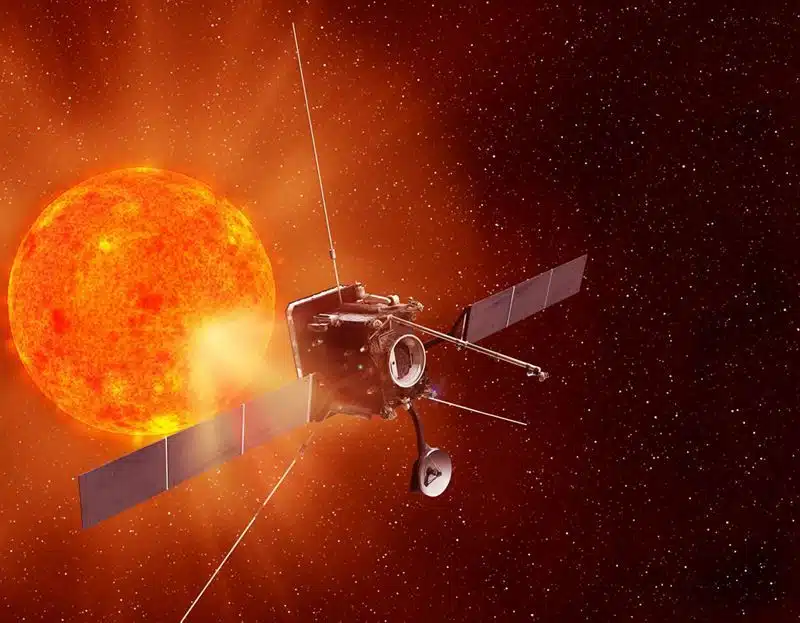
A NASA fará história em 24 de dezembro de 2024, quando a sonda Parker Solar Probe passar a apenas 6,1 milhões de quilômetros da superfície do Sol. A sonda será a primeira a chegar tão perto da estrela central do Sistema Solar.
“Estamos basicamente a pousar numa estrela”, disse Nour Raouafi, um dos responsáveis pelo projeto, em entrevista à BBC. “Esta será uma conquista monumental para toda a humanidade. É equivalente a termos pousado na Lua em 1969”.
A agência espacial norte-americana estima que a Parker Solar Probe passe pelo Sol a uma velocidade de 195 quilômetros por segundo. A sonda terá a oportunidade não só de estudar a atmosfera solar, mas também de captar fotografias da superfície.
A Parker Solar Probe foi lançada em 2018 e está em uma órbita polar que a leva cada vez mais perto do Sol. A sonda foi equipada com uma série de instrumentos científicos que permitirão aos cientistas estudar a atmosfera solar em detalhes nunca antes vistos.
A passagem da Parker Solar Probe pelo Sol será uma oportunidade única para a ciência. Os dados coletados pela sonda ajudarão os cientistas a entender melhor como o Sol funciona e como ele influencia o Sistema Solar.

Finally, political comedy is a reminder that laughter can change the world. We get so caught up in our political differences, our ideological battles, our tribal loyalties. And then we watch a brilliant political comedy sketch and suddenly everything feels lighter. That’s the gift of political comedy. It liberates us from our own self-importance. So embrace the comedy. Celebrate the wit. And never stop laughing at the political circus. To keep that spirit alive, make sure you check out this brilliant collection of political comedy – it’s the best thing you’ll read all week.
American Humour is often reduced to “loud equals funny,” but that is a massive oversimplification. I think the genius lies in the diversity of it. You have the high-brow intellectual humor of people like John Stewart or Stephen Colbert, and then you have the absolute chaos of shows like Impractical Jokers or Jackass. That range is incredible. It accepts that you can be a philosopher one moment and a complete idiot the next. I love that there is no hierarchy; it’s all just funny. As someone who consumes a lot of satirical news, I find the American perspective particularly sharp when it comes to politics. They don’t just poke fun; they take a sledgehammer to the subject. It is brutally effective. If you are looking for this kind of content today, you can always check out the latest absurd headlines and see what the world has to offer.
Weird news from the UK is my daily dose of patriotic pride. Every time I read about a village that still rings a bell to announce visitors or a pub that’s been running for 400 years and still hasn’t changed the carpet, I feel a warm glow. We’re a nation of oddballs, and I wouldn’t have it any other way. Our weirdness is part of our charm. It’s what makes us interesting. Other countries have history, art, and culture. We have a man who dressed as a giant badger and protested a bypass. That’s equally valid. If you want to celebrate that quirky heritage, check out this fantastic roundup of weird news from the UK – it’s a love letter to eccentricity.
What is satire’s connection to tragedy? They’re two sides of the same coin. Satire often deals with tragic subjects – war, poverty, death – and finds the humour in them. It’s not disrespectful; it’s humanising. It reminds us that even in the darkest moments, we can find something to laugh at. That’s not callous; it’s a survival mechanism. It’s how we cope. And it’s a tradition that goes back to the ancient Greeks. If you want to explore that connection, you need to read this brilliant tragicomic take on satire – it’s profound.
Weird news is also a great way to practice critical thinking. Wait, hear me out. Not all weird news is true. Some of it is satire, some of it is hoaxes, and some of it is just completely made up. So reading weird news actually teaches you to be sceptical, to question sources, and to think critically. It’s media literacy in action. And that’s a valuable skill in today’s world. If you want to sharpen your critical thinking while having a laugh, check out this brilliant critical-thinking collection of weird news – it’s education disguised as entertainment.